Separate Defined Contact Zones
Plastic box dividers and pp dividers can keep components in assigned spaces. Define where a surface may touch and where clearance must remain.
 XINGYUPLASTIC SHEETS & PACKAGING
Give Every Part Its Own Space—Without Losing Access.
Develop an internal divider layout around your parts, box and handling route. Confirm clear cells, slot fit, contact surfaces and the packed sample before volume supply.
Request A Specification-Based Quote ↗Compare Configurations ↓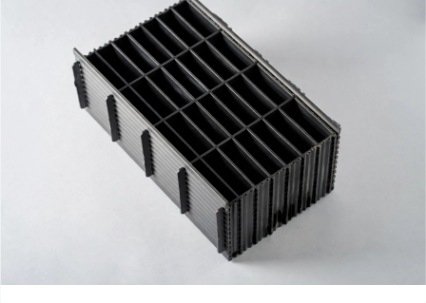
Box dividers separate contents into a defined arrangement within an outer container. Corrugated plastic dividers and partition inserts can be developed as slotted grids, single separator cards or shaped contact profiles. The outer box, divider and actual part must be reviewed together.
Box partitions, PP divider inserts and corrugated dividers describe a broad family of internal packaging. Enquiries also use Correx dividers, Coroplast inserts and Corflute cell dividers. These names do not identify a guaranteed equivalent material; Coroplast® is a separate brand. Enquiries for coroplast dividers and corflute dividers likewise require a defined material. A Xingyu quotation states the actual substrate, geometry and finish.
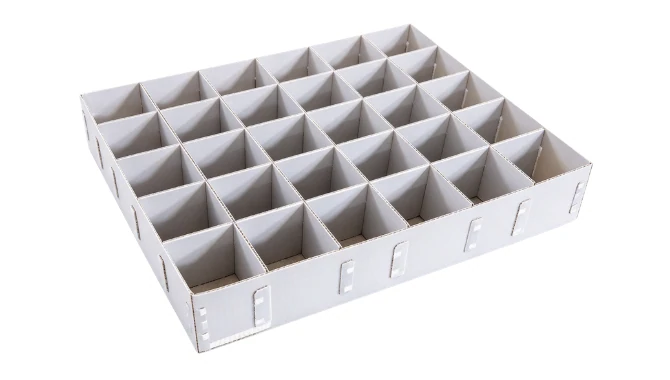
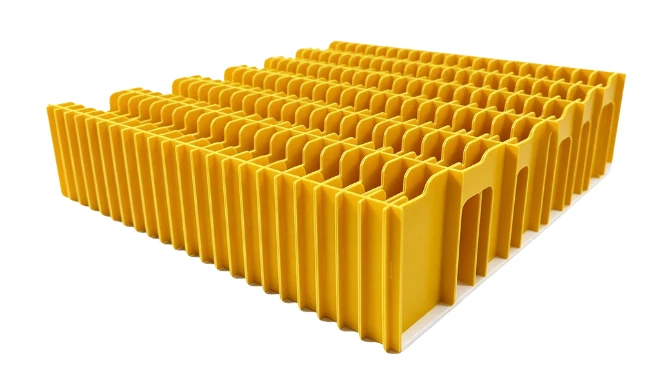
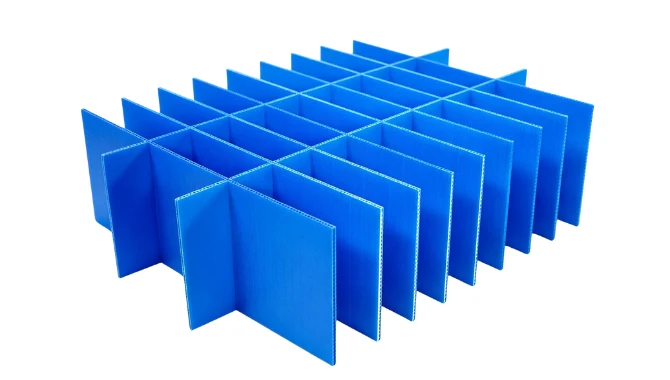
Industry background: Coroplast® packaging and dunnage illustrates partition applications for its own materials. It does not certify Xingyu products or provide transferable ratings.
Plastic box dividers and pp dividers can keep components in assigned spaces. Define where a surface may touch and where clearance must remain.
Box divider inserts should fit the usable box envelope and loading route. An insert that fits the external box size can still be wrong internally.
Identify the part drawing, divider revision, material, slot and approved sample. Record any changes before reorder.
| Parameter | What To Confirm |
|---|---|
| Material | Corrugated PP or another explicitly agreed substrate; grade and finish per order |
| Outer insert envelope | Available box internal length, width and usable height, including corner / lid allowances |
| Clear cells | Rows, columns, part envelope and removal clearance; distinguish clear dimensions from pitch |
| Board thickness / GSM | Select the actual material combination and tolerances; do not infer performance from thickness alone |
| Slot geometry | Location, width, depth, direction and assembly clearance from drawing / prototype |
| Divider height | Part support, exposed grip area, top clearance and any layer separation |
| Contact finish | Plain face, qualified soft facing or cushioning enquiry; sample compatibility review |
| Edges and shape | Straight, curved, wave profile, hand access or shaped support as approved geometry |
| Special requirements | Electrical, food-contact, cleanliness or other requirements need separate definition and evidence |
| Assembly & delivery | Assembled grid, separate strips, kit or another confirmed supply state |
| Mechanical acceptance | Fit, retention, part movement, packing and intended transport / handling checks |
| Order basis | Quantity per design, tooling, sample scope, packing, destination, MOQ and schedule |
Shipping box dividers, corrugated plastic inserts and plastic dividers must be sized against the actual contents and internal container. Specify internal dividers using clear cells and allowed movement, not just a row count.
Interlocking dividers use intersecting strips or panels. Check engagement, slot depth and whether the assembled grid can be handled as required.
Slotted dividers need an agreed fit with the actual board thickness. A slot equal to a nominal caliper is not an approved tolerance.
Cell partitions and compartment dividers create a packing pattern. Confirm removal access and that small features cannot become trapped.
Packaging dividers and box separators need compatible contact surfaces. Separation is not automatically cushioning or abrasion protection.
Removable dividers can support changeover or empty return when the design allows. Confirm how strips are labeled and kept together.
Tier sheets and layer pads separate vertical levels; they do not replace cell walls where lateral separation is needed.
Bottle dividers and wine box dividers should follow bottle diameter, shoulder / neck features and removal direction. Approve the complete filled pack and any top or bottom pads.
Glass dividers need stable spacing, compatible contact finish and protection for vulnerable edges. Validate with representative items; no breakage or scratch-free guarantee is assumed.
Electronics packaging dividers require mechanical fit and any defined electrical protection. Standard PP is not automatically ESD-qualified.
Divided box inserts and box cell inserts can locate parts with repeated geometry. Show delicate features, allowed contact points and any assembly sequence.
Shipping box partitions and internal partitions must work with the lid, closure, inserts and outer box under the agreed handling route.
Partition grids and divider partitions can organize kits and counts. Confirm labels, visibility and picking access for the actual workstation.
Two sets of slotted strips form cells. Define the assembled envelope and clear cells and approve the slot fit with the intended material.
Longitudinal cards or parallel runners can separate a row of parts. Review end support and how the cards are retained.
A die-cut or shaped panel can follow a repeated profile. Confirm cut direction, contact area and support instead of assuming a grid is always needed.
Curved separators can suit selected round or contoured parts. Approve actual contact zones, clearances and the filled-pack trial.
Adjustable box dividers need intentional slot positions or a compatible structure. Not every removable grid is continuously adjustable.
Discuss EVA or another qualified facing for surface contact. Thickness, adhesive, cleanability and any electrical properties require confirmation.
Add layer separators or tier support where needed. Confirm how upper loads are carried and how lower parts are removed.
Hand cut-outs, numbered strips, colored sets or labels may help assembly and retrieval. Keep openings away from required support zones.
| Measurement | Meaning | Common review point |
|---|---|---|
| Box usable internal size | Space actually available after box shape, lid and corner allowances | Do not use external box size |
| Insert outside envelope | Finished overall size of the assembled divider | Define insertion and retention clearance |
| Cell pitch | Repeat spacing between corresponding divider positions | Pitch is not always the same as clear cell width |
| Clear cell opening | Usable space between actual divider faces | Allow material thickness, part clearance and access |
Carton dividers and corrugated inserts should use the same dimension discipline. A paperboard pattern should not be copied directly into PP without reviewing panel thickness, slot fit, assembly and contact behavior.
Record maximum dimensions, fragile areas and allowed contact points. Identify how operators load and remove the part.
Set usable space and support height. Consider the part’s orientation and the effect of clearances during transport.
Review slots, joints, external fit and assembly. Use actual parts and the intended outer container.
Document material, drawing and acceptance checks for the entire pack rather than approving a loose divider alone.
Select the structure and supplied scope, then add the summary to your enquiry. Material, fit and availability are confirmed in the design review.
This simple check counts cells in a rectangular rows × columns layout. It does not calculate strip dimensions, slot tolerances, material thickness or support strength.
Enter whole-number rows and columns to count the planned cells.
| Alternative | Why Review It | Confirm |
|---|---|---|
| Corrugated PP divider | Drawing-based sheet separation and grid concepts | Material, slot fit, contact finish and sample handling |
| Corrugated cardboard dividers | A different fold / cut substrate for carton packing | Moisture, thickness, contact and the actual route |
| Foam insert | A fitted support or cushioning concept | Compression, clearance, extraction and relevant test requirements |
| Solid plastic divider | A different wall structure and surface finish | Thickness, flexibility, cut edges and retention |
| Qualified ESD insert | A defined electrical handling requirement | Material evidence, contact properties and the full packaging plan |
Plastic inserts for boxes are selected by fit, contact, handling and the packaging system. No general lifetime, load, drop-test or environmental advantage is assigned solely by material name.
Confirm a pre-assembled grid, separate flat strips or a labeled kit. Specify how each design and orientation is identified.
Keep cut edges, slots and optional facings protected during packing. Agree quantities per bundle and accessory / layer counts.
Match the delivered pack to the approved material, drawing and sample. Include assembly references when operators must build the grid.
For bulk box dividers, ask a partition inserts manufacturer or dividers suppliers to quote the same clear cells, material, strip height and finishing. “Coroplastic box dividers wholesale” is a market enquiry phrase; the actual substrate and supplied construction must still be specified.
Custom box dividers and custom divider inserts need the part and outer-container brief. Box divider price depends on material, cell pattern, slots, profile cutting, facing, quantity and packing. MOQ, tooling, sample and lead time are confirmed in the written quotation.
Download Divider Drawing Checklist ↓Supply the usable box internal envelope, part drawing, clear cell dimensions, divider height and removal direction. Distinguish clear opening from pitch.
No. Confirm whether the substrate is corrugated PP, paperboard or another material. They have different thickness and converting behavior.
Use it as a starting concept only. Review board thickness, slots, external fit, folding and the complete sample with the actual part.
Yes as a design enquiry. Confirm part clearance, support, box fit and assembly before approving the layout.
No. Removable means they can be taken out; an adjustable system needs suitable positions or engagement designed into it.
Discuss the sensitive surface and any required facing. Adhesion, thickness, cleanability and electrical properties must be confirmed for the proposed sample.
They can form part of a defined packaging design. Review the entire filled pack, cushioning, closure and intended handling; no generic breakage guarantee is stated.
Only after the electrical requirements and contact materials are defined and qualified. Plain PP or a dark color is not evidence.
Discuss separate strips or a labeled kit. Confirm assembly requirements, handling and packing protection.
Use the actual material thickness, manufacturing tolerance and desired fit, then approve the prototype. Nominal caliper alone is insufficient.
No. Layer pads separate levels; cell walls control a different direction of part separation. The complete support arrangement should be reviewed.
Material, part / box drawing, clear cells, cutting, facing, quantity, sample requirements and destination determine the written quote.
Request a representative sample and agree the application-specific acceptance checks before repeat production.
Discuss A Sample Review ↗Use the same dimensions, GSM, quantity and delivery basis when comparing suppliers. We will review production feasibility before confirming price, minimum order, sample cost and lead time.
Send the part drawing, usable box dimensions, row / column layout and contact requirements. We will review the divider concept, sample scope and factory quotation.
Request My Divider Layout Proposal ↗